
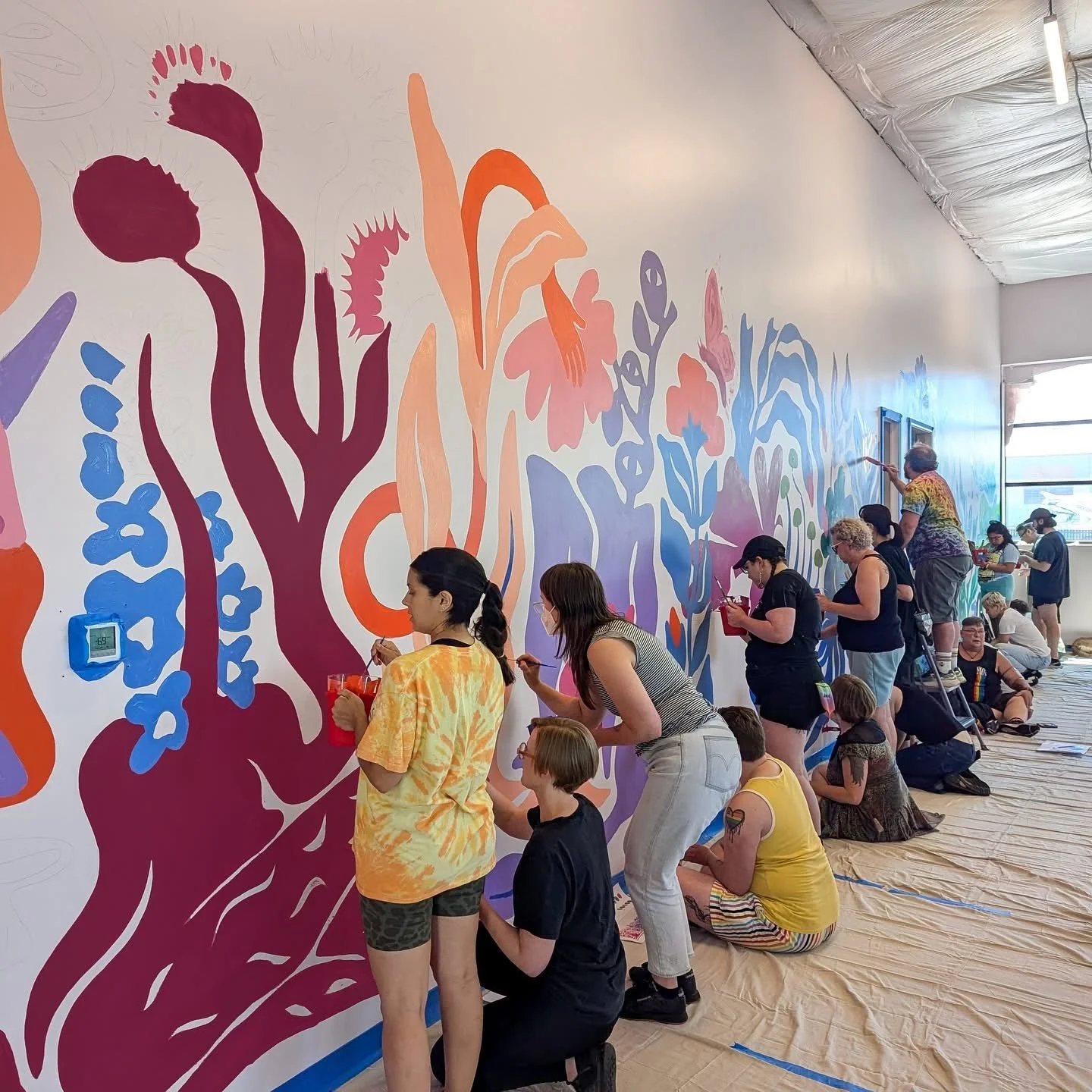
Mission, Vision, & Values
The Foundation of Our Organization.
Our Mission
To enrich the health of the trans, queer, intersex and gender diverse communities through trauma-informed care, culturally-affirming services and social justice advocacy.
Our Vision
To envision and build liberatory futures, we need robust networks of support. We can think more clearly when we are fed, we can dream more vividly when we are housed, and we can advocate more effectively when we are connected.
How We Get There
We foster LGBTQIA2S+ community resilience by meeting basic needs, grounding queer and trans folks in community, and creating a stable root system from which to grow. Leadership begins with stability. Before we can organize, advocate, or imagine new futures, we need safety, dignity, and belonging
We envision a resilient and interconnected ecosystem of LGBTQIA2S+ community organizers in Oregon where we are able to strategize, learn, share resources, dismantle oppressive systems, and build power together.
Whether through housing stabilization work in Portland or capacity-building work statewide, we help create the conditions for stability, connection, and expansiveness.
Our Values
Our values are not aspirations we hang on a wall. They shape how we care for one another, how we share power, how we build relationships, and how we work toward a world where queer, trans, intersex, and gender-diverse people can thrive.
We know our liberation is bound together. Our work is rooted in the understanding that none of us are free until all of us are free.
Racial Equity
There is no queer and trans liberation without Black liberation and Indigenous sovereignty.
Racial equity is a fundamental lens through which we approach our work, internally and externally. Challenging cis-hetero-patriarchy also requires us to confront white supremacy and the interconnected systems of oppression it produces and reinforces, including racism, ableism, transphobia, anti-Indigeneity, and misogynoir.
We work to center those most impacted by these systems, examine how power operates within our own organization and movements, and build practices that move resources, access, and decision-making toward communities that have historically been denied them.
Disability Justice & Collective Access
We are inspired by Sins Invalid's 10 Principles of Disability Justice and their vision of liberation led by those living at the intersections of multiple systems of oppression.
Accessibility is not an accommodation we add after something has already been created. We understand access as a collective practice and a shared responsibility. We work toward spaces, programs, workplaces, and movements where people can participate as their whole selves and where different bodies, minds, ways of communicating, and ways of moving through the world are valued.
Interdependence makes our communities stronger. We build access together.
Collective Care & Interdependence
We believe communities are safest and strongest when we are connected to one another.
Collective care asks us to move beyond models that divide people into helpers and people who need help. Every person brings knowledge, experience, capacity, and needs into community. We create spaces where people can both give and receive care, where asking for support is welcomed, and where mutual aid and peer support are recognized as powerful forms of community infrastructure.
Care is not separate from our work. Care is how we do the work.
Shared Power & Community Leadership
People closest to an issue hold essential knowledge about how to address it.
We work to share power rather than concentrate it. That means creating meaningful opportunities for community members, staff, peers, and partners to shape decisions that affect them and valuing lived experience alongside professional and institutional expertise.
Our advocacy is community-centered, our leadership is participatory, and we believe those most impacted by injustice must have real power in building what comes next.
Rural-Urban Solidarity
Queer and trans liberation cannot stop at Portland's city limits.
As a Portland-based organization working statewide, we recognize the historic concentration of funding, infrastructure, and institutional power in urban communities. Our role is not to arrive in rural communities with answers. We follow the leadership of rural organizers, build relationships over time, and work to move resources and opportunities toward our rural-based counterparts.
We believe in moving at the speed of trust. That can mean moving more slowly, listening longer, and allowing community relationships to shape what comes next. We would rather build something durable together than build something quickly without the people it is meant to serve.
Transformative Justice & Radical Compassion
We believe accountability and compassion can exist together.
Our approach is grounded in the understanding that people are more than the worst thing they have done, the hardest thing they have experienced, or the ways they have learned to survive. We seek responses to conflict and harm that prioritize safety and accountability while resisting punishment, disposability, and carceral thinking.
Radical compassion does not mean avoiding boundaries or accountability. It means holding people's humanity while we practice both.
Rest, Joy & Sustainability
Our movements need people who can stay in them.
We reject the idea that exhaustion is proof of commitment or that burnout is an inevitable cost of doing justice work. Rest, wellness, boundaries, joy, and celebration are part of building sustainable movements and sustainable lives.
We want our communities to do more than survive. We want queer and trans people to experience pleasure, connection, creativity, rest, celebration, and joy. Those things are not distractions from liberation. They are part of what liberation is for.
Radical Imagination
We refuse to limit our imagination to what existing systems tell us is possible.
Many of the systems our communities are expected to rely on were never designed with queer and trans people at the center. Rather than simply asking how we can fit our communities into those systems, we ask what we would build if we started with our communities instead.
We experiment. We learn. We listen. We change course when something is not working. And together, we imagine and build queer and trans futures rooted in belonging, dignity, justice, and collective care.